Role Taking: Who or What are you within the game? What kinds of role-play opportunities are presented, ways of inhabiting an identity and performing a related practice/talent? What language, new vocabularies and discourse practices are ‘in play’?
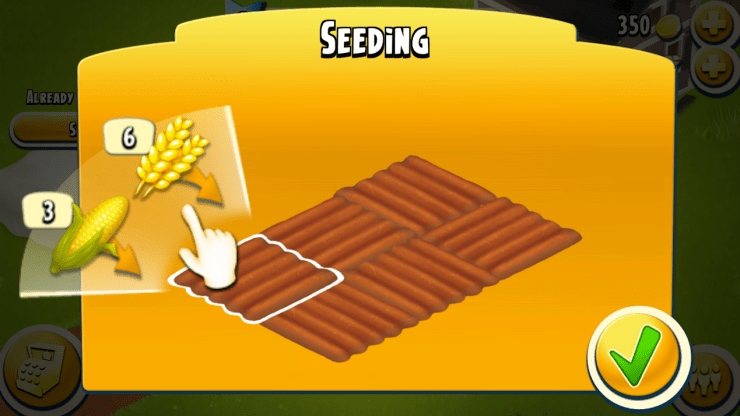
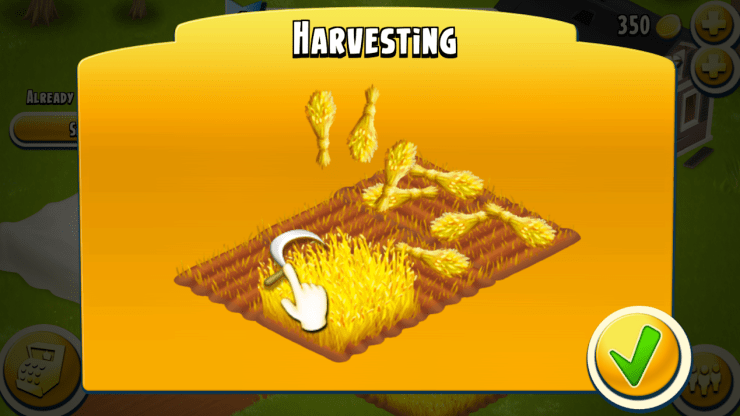
Within the game Hay Day, you are a character beginning to operate your own farm. Creating and tending to crops, “learning the lay of the land”, purchasing land, farm animals, harvesting feed, producing baked goods and selling your products in your own shop available to the community. You role-play and inhabit the identity of a farmer as you select what time of vegetable, grain or plant crops you would like to grow, which farm equipment you would like to purchase and generate profit with. Starting as a new player the app uses “farm language” that users might be unaware of such as seeding, harvesting etc as well as allows the user to purchase and use different tools/machinery for different tasks on the farm. The app provides descriptions of the action as well as gives the new user guided practise ex: use your finger and swipe the sickle to chop down the grain.
‘Know-How’ & ‘Know That’: Are embodied practices part of the game challenge (know how: performing a set of competences or a practice) and/or topical content knowledge (know that: embedded knowledge about something – like historical facts, specialized languages, geography)? How is knowledge, facts, discourse practices or complex meaning situated within the game (see Gee, ‘situated meaning’) – what and how do people learn through play?
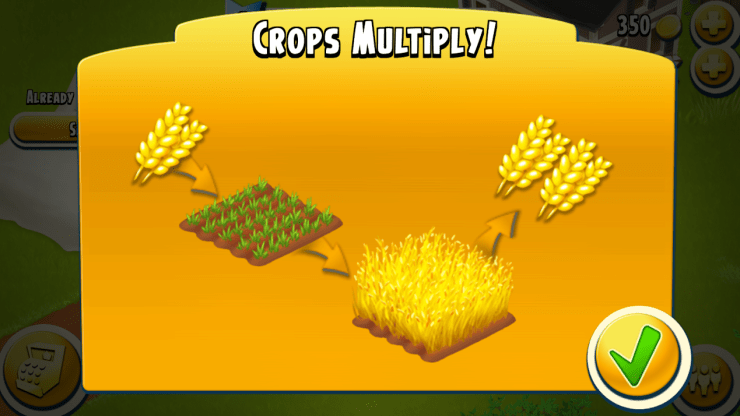
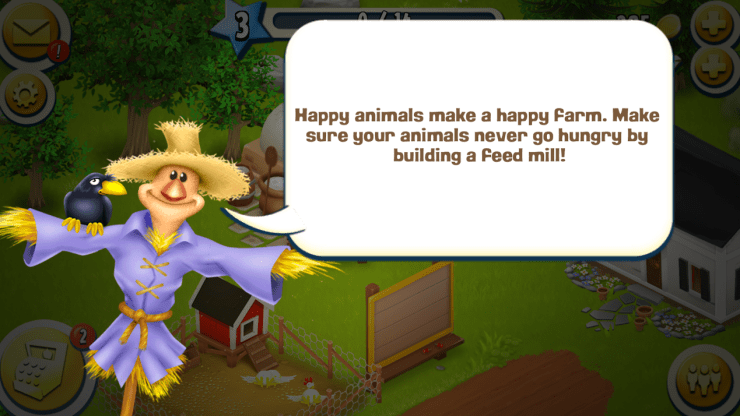
An example of embodied practice could be when the user’s chickens need to be fed after they lay their eggs. Chickens eat feed that is made with wheat. If I, the user know that I need to feed my chickens it would be important for me to grow wheat before the chickens lay their eggs so the wheat grows in time for me to harvest and produce chicken feed with my farm’s feed mill for the chickens go hungry. This type of pre-emptive thinking is required and fostered through out the app. The users applies their knowledge of what chicken feed is made up of to grow the crop in a timely manner.
Within the reading Gee mentions “Students come to understand the words in a situated fashion only if and when they can apply the words to specific situations and to the solution of specific problems” I believe that having the game provide pop up instructions or tips helps to reinforce these new languages/ practices that the new user might be unfamiliar with at first. The user reads the objective, watches the game demo and consolidates this new learning by doing the motion. The app doesn’t use farming language and expect the user to learn by blindly clicking around the app until something works which I believe learning complex academic language can feel like. This situates the user in an environment to fully understand what these new words mean.
Transferability? Is the know-how or knowledge (or learning) transferable to other practices, settings, challenges (outside of formal game boundaries)?
I believe that time management is being learned through out playing the game. Each crop and animal takes a different amount of time to complete their task and so the player has to be sure of how to time things correctly for their advantage ex: seeding, baking and cooking as many different products you can before going to bed so you wake up with a flourishing farm ready to collect. It forces users to become as efficient as possible. Although very simplified, users learn a little bit about the stress of running their own business as products are in demand and you have to either have them in stock or be resourceful and buy them from other farms in order to satisfy your customers and keep them returning. Users receive earnings from every order and it costs money to buy farm equipment, buildings, animals. Users gain financial literacy and saving money in order to purchase equipment to make farming easier for your character. Users also have to problem solve when running low on specific supplies or running out of storage in the silo, the user needs to be strategic with every move.
Critical Framing: Does the game represent or mis/represent people (gender stereotypes, race/ethnicity) or promote certain perspectives? Does the game communicate ideological perspectives or values? (see more on that below if you want to do option 2).
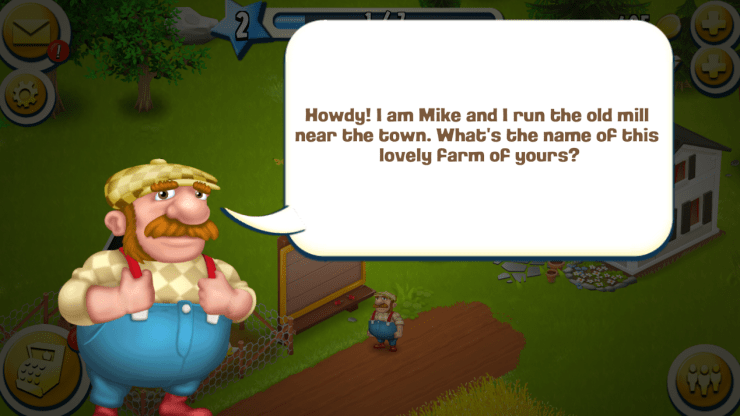
Something that I found different about the game is that it does not allow you to customize your character or ever see what your character looks like/ what gender they are. I believe this is so that one feels fully immersed within the game and you don’t lose connection when you are physically chopping down the grain even if it is just with your finger, you are physically farming and not your animated character. I did witness stereotypical farm identities present which are white, oversized/burly male “mans man” farmers which give you advice or are your neighbors in the game. While this is evident there are different representations present such as women of colour coming to the farm to purchase goods/place orders with your farm as well as women owning and operating their own successful farms.
 New Media Literacies and Culture